Category Archives: Worship
Click here to view worship announcements
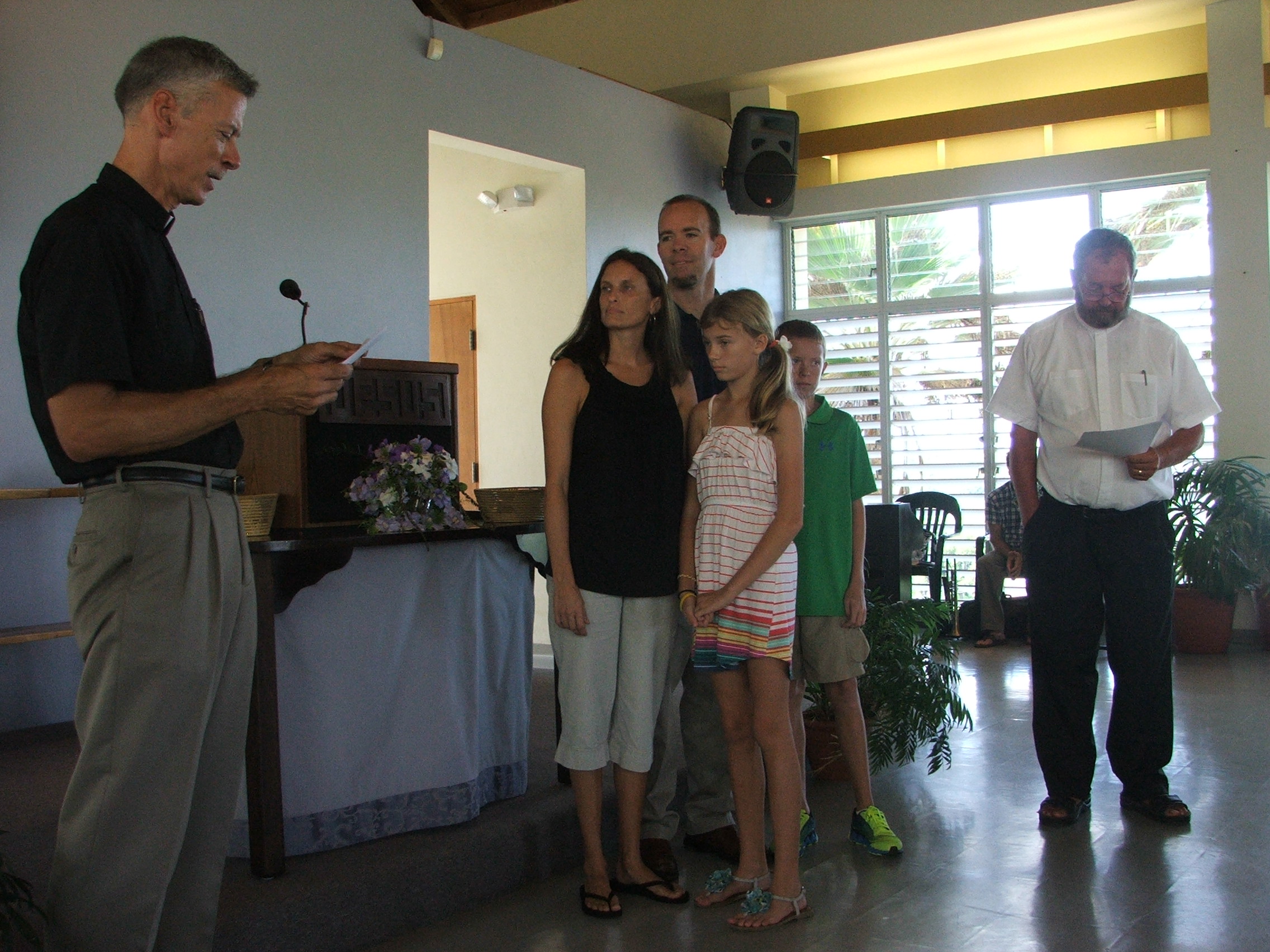

“Outrageous Acts” – September 29, 2013
“Outrageous Acts” – September 29th
Jeremiah 32:1-3, 6-15
Luke 16:19-31
“Let the Words of my mouth . . . “
It’s been a few years ago now, but I can still remember with great detail when Tracie and I moved to the Appalachian foothills of East Tennessee and decided that it was time to stop renting and to “take the plunge” into home ownership. We did what I’m sure many of you have done; we connected with a realtor, searched the classifieds, read all the “Home” publications, asked around about the schools, and did a lot of due diligence. We found a bank that was willing to give us a loan and we and began to fill our Saturday mornings, Sunday afternoons, and weekdays after work, looking at houses and more houses.
For us, one of the locations that seemed really promising was on one of the local lakes. How cool would it be to live on the water we thought? The old saying that “hindsight is 20/20” is really true and in our case, it was true regarding our realtor. Please, no offense to any realtors here this morning. She was nice enough, but a bit on the, how should I say it . . . pushy side. All seemed good at first, but as time went on we could tell that she was used to showing just a handful of houses and then pushing her clients to a decision. Maybe her title “million dollar producer” should have been our clue.
Anyway, we found a house on the lake that we liked okay, and she strongly encouraged us to make an offer, which we did. We left a bit excited but soon wondered, what have we done! We liked the house, but did not love it. The location was okay, but it was a part of the lake that would go dry in the winter, our commute might be long. OMG, what have we done!
Well, the sellers accepted our offer, with the contingency that they be allowed to keep their refrigerator. That was our out. We said no; have to have the fridge, so we walked away. Whew! I’m sure to this day, those folks still talk about the time they “almost” sold a house but lost the deal over a refrigerator!
In today’s Old Testament reading, we hear about the prophet Jeremiah and a real estate purchase that, on the face of it, just does not make a lot of sense. In fact, instead of an outrageous act, it seems more like a stupid act. Catch the setting.
It’s 586 BC and the Kingdom of Judah is on the brink of a takeover. The Chaledean armies have already taken most of the land and they are now starting to lay siege to the city of Jerusalem. King Zedekiah has tried to rally the citizens with various propaganda efforts, but it’s to no avail as most of the citizens are now in total despair. Some will die in the takeover but most will be taken away from their homes and into captivity in Babylon.
Now I can imagine that cash or even jewels, which could be used to buy food or maybe even stashed away until order was restored, might have had some value, but I sure that real estate was worthless, especially since the Chaldean armies have already taken it over!
But here is Jeremiah, being approached by his sly cousin Hanamel. Now Hanamel knew that Jeremiah had a right to this land, so he takes a gamble, hoping that his “religious nut” of a cousin, will bite. He offers a price that, before the Chaldean’s were tearing down the city walls, was probably quite reasonable. And Jeremiah accepts! Is he out of his mind!
We are treated to a long litany of details as the land deal is completed. The contract is written, witnesses are secured, the payment is carefully weighed out, and finally copies are carefully sealed in clay jars to be buried for safe keeping. This was not just a private transaction. Just as our closings become public records, Jeremiah’s prophetic act was being witnessed and I’m sure being talked about in the community.
“Did you hear what the crazy prophet just did”. “I can’t believe he is buying that land. What an idiot”. But Jeremiah knew what God had promised. He knew that exile would eventually end and that someday . . . maybe not in his lifetime, but someday, God’s promises would prevail. And he was right!
So what can we learn today from this “crazy prophet”? Is this a message for us to all go out and do some crazy real estate transaction? Probably not. Is it a message for us to be a little outrageous with our actions? Maybe. But what does that mean?
Outrageous actions can mean different things to each of us. I think it would be pretty outrageous for someone to go bungy jumping off the Royal Gorge Suspension Bridge in Colorado. Sitting just over 1,000 feet above the Arkansas River, the idea of jumping off a perfectly good bridge for an 800 foot plunge qualifies in my book as outrageous.
I also think that it would be outrageous to hike the whole Appalachian Trail in one season. Hiking 15 or so miles per day; sleeping on the ground or in a shelter every night for 4 months; eating reconstituted food; enduring all kinds of weather; is pretty outrageous.
But danger or pushing oneself to the extreme is just one aspect. Outrageous acts can also be those actions that fly in the face of what society would call NORMAL or APPROPRIATE. And that is what we as Christians do. We are in a counter-cultural movement. We are asked to do things that the normal conventions of society often frown upon.
Think back to some of the lessons we have heard from Jesus in our journey though Luke’s Gospel. “Love your enemies, do good to those who hate you”. “Sell all you have and follow me”. “Don’t sit at the place of honor”. And “The first shall be last and the last shall be first”. We see this upside down aspect in today’s Gospel reading.
Our story has two characters representing polar opposites. The rich man is not given a name, but is told to be dressed in Purple, so we assume that in the convention of that time, he is in an extremely high position. The poor man, named Lazarus, is so bad off that dogs are licking his sores, which would be as low as you could be in Jewish Society.
Both die and their status is reversed . . . the Rich man is in Hell and Lazarus is in heaven. Now we are not told that Lazarus was especially virtuous in any way or that the Rich man was evil or unjust. All we can glean is that he neglected to see, really see Lazarus and he let him go hungry. After pleading for a drink of water and being denied, the rich man wants Abraham to send Lazarus back to warn his brothers but Abraham says that he can’t . . . that the message is already there . . . they just have to hear it.
And what is that message? It’s that God loves the poor, the widow, and the orphan. It’s Amos telling us to “let justice roll down like living water”. It’s Micah telling us that that we are to “have mercy and walk humbly with our God”. It’s Jesus telling us that whatever we do to the “least of these” we are doing to God. And to do this . . . justice, mercy, caring for the needy; often means we have to fly in the face of convention . . . we might just have to be outrageous.
Jeremiah was outrageous. To begin with he spoke the truth in the face of adversity. Remember, this is the same Jeremiah who earlier told God, “I can’t speak for I am just a boy”. Now he is speaking up against the King; telling him that his policies were wrong and that the country would eventually have to pay for his mismanagement. Speaking up got him placed under house arrest.
All this week there has been talk about a government shutdown for failure to pass a funding extension. Party lines have been drawn, but once again it’s the poor and vulnerable that get caught in the middle.
Coming this November, 47 million people who depend on the Supplemental Nutrition Assistance Program (also known by the acronym SNAP), 22 million of them children and 9 million elderly or disabled will see their benefits decreased. Here in the VI alone, this will be a decrease in close to 4 million dollars. What will this impact be? Are we letting our voices be heard or are we like the Rich man . . . not seeing and not acting?
Outrageous acts. They go against the grain, but they don’t have to be huge like buying a piece of property like Jeremiah. They can be as simple as a phone call, letter, or email to a legislator.
Deciding to fast one meal a week and give the money that you would have spent on food to an agency that fights Hunger can be outrageous. Staying out all night on sea turtle watch, helping to protect an endangered species, is an outrageous act.
Committing to tithe 10% of your gross income to the church, putting your money into its mission and ministry, especially in these difficult economic times, is an outrageous act.
Taking the time to see, really see a homeless person can be an outrageous act. In San Francisco, a seminary student started sharing a McDonald’s hamburger and a cup of Starbucks with some of the homeless that he passed every day in the city. He was interested in not only giving them a meal and something warm to drink but in hearing their stories, of really seeing them.
Before you know it, others became involved and soon a hair stylist was donating time for haircuts. A dentist began offering some much needed dental care. Another helped with teaching and practicing interviewing skills. A full-blown ministry came from simply listening. Conventional . . . no. Outrageous . . . yes!
The parable of the Rich man and Lazarus is just that, a parable. It’s not intended to give us a systematic theology of what heaven and hell is like. But what is does do is tell us that as Christians, we need to be committed to social justice because God is committed to social justice. And this cause pushes us to do what society might just call outrageous acts.
There is so much more going on in the world than meets our common sight. God is alive and active, bringing new ways and new contexts in which to engage our insights.
Jeremiah invested in God’s future . . . he bought his field. What are we going to do?
Thanks be to God!
Let us pray:
God, we thank you for your Word which goes before us to lead, to guide, and to illumine our path. Help us to be doer’s of your Word and not just hearers. In Christ Name, Amen.
“Church, What is it Good For?” – August 11, 2013
Sermon: Church. What is it Good For?
Isaiah 1:1, 10-20
“Let the words of my mouth . . . “
I was reading the other day and I came across this article that said “Chinese Engineers Invent Self-Cleaning Clothes”. Seriously, I’m not making this up. I wondered if it was written as a joke for college students or lazy bachelors, but seriously, clothes that will have the capacity to clean themselves. How you might ask? Good question. According to the study, dunking cotton into a vat of specially crafted “nanoparticles”, whatever those are, creates a material that self-cleans whenever it becomes exposed to sunlight.
In a test, the engineers treated the fabric and then soaked it in orange dye for 30 minutes. They then hung the clothes under simulated sunlight; and after a short time, the dye released and was able to be rinsed off with water. Amazing but true. I’m not sure what it does with regard to various “odors” that get in our fabrics, but at least the material would always look clean. However, it’s not a total excuse for laziness. One still has to hang them up in the sunlight and rinse them off. Some work still has to be done. This is a bit like what Isaiah is saying to Israel in our passage this morning. To be restored or “washed clean”, Israel is going to have to do some work.
Hear again what was read in our assurance of pardon this morning. “Come now, let us argue it out, says the LORD. Though your sins are like scarlet, they shall be like snow; though they are red like crimson, they shall become like wool”. Washed clean from all sin and unrighteousness. Visualize that imagery. As clean as freshly fallen snow.
It’s been a while for me now, but when Tracie and I were living in the foothills of the Appalachians in Tennessee, we used to get some really nice snowfalls. Because of our jobs, we usually did not have the luxury of just sitting by the fireplace and drinking hot coco all day long. Unfortunately, we had to go and shuttle people to and from work in our 2-wheel drive, wannabe Explorer. However, there was something about being outside in that clean, pure, snow, where all of the sounds of civilization just seemed to melt away. You really do get a sense of total purity. That is what Isaiah is saying. As clean as snow and as soft as pure wool. But there is some backstory.
In our passage, Isaiah is writing in Jerusalem during the reign of four different Judean kings, probably around 700 BCE. He is speaking for God who is basically bringing a lawsuit before the nation of Judea for their failure to keep the covenant. Not only have they turned away from YHWH to worship other gods, they have forgotten their roots as a people who were once enslaved and exploited in Egypt. In short, they have gone from being oppressed to being the oppressor and God is not pleased.
“Hear the words of the LORD you rulers of Sodom! Listen to the teaching of our God, you people of Gomorrah”! Words to both those in charge and to the people they govern. One caveat about Sodom and Gomorrah. Because of all the issues in the church today surrounding homosexuality, we have a tendency to categorize Sodom and Gomorrah with sexual sin. For the people in Isaiah’s time who heard these words, that was simply not the case. Sodom and Gomorrah were wicked cities that exploited the poor, the widow, and the orphan. It was not about sex but rather a failure of the people in these two cities to show genuine hospitality to both the stranger in their midst and to those in dire need.
That is what Isaiah wants the Kings and the people of Judah to hear. They are on the same path of destruction as those cities, if they don’t change their ways. But can’t you hear the King saying, “But Isaiah, we perform the rituals; we offer sacrifice to atone for our sins; just as we have been instructed; we are fulfilling the law”. To which God replies, “I have had enough of your burnt offerings . . . trample my courts no more . . . incense in an abomination to me”.
These are really strong words. Earlier I had asked that you either write down or just think about one of your favorite items of worship. These words from Isaiah, if they were being said to us today might sound like this, “I hate your worship. Your prayers make me sick. I loathe your music. Your sermons are a sacrilege. Who asked for your offerings? Your Holy Communion stinks. I want none of it!” [tear up your order of service]
God does not want any of this? But wait a minute. Isn’t this how we are supposed to worship. While it is not found in its entirety in our Bibles, the framework that we follow closely resembles how the early church set their worship. We have a GATHERING; we offer a time of CONFESSION and PARDON; we PROCLAIM the WORD; we RESPOND to the word with communion, baptism, our offerings; and then we SEND ourselves out into the world. It’s all very Reformed . . . Right!? [tear another order of service]
Okay, maybe we need to move to a more contemporary service. We will sing praise songs, have a shorter sermon, use PowerPoint presentations to share the message; and send out the service on a podcast and the internet each week. We will rock on Facebook and Twitter and we might even set up streaming or Skype so people from far off places can watch and see and share in our worship. [tear up another order of service]
Okay, we can do what some people are doing in other parts of the country and start having church in other places. We will go to bars during Sunday morning when they are not being used to try and reach those who don’t want to actually come to “church”. We will find the unchurched and bring church to their turf. We will go where no church has gone before! [tear up another order of service]
So, what the heck are we doing here? Why do we sing and pray and preach? Maybe we should just pull in the tables; stack up all the chairs; close the hurricane shutters; and head home. What’s the point of all this?
Well, according to our Reformed tradition, the reason we come together every Sunday is to Glorify God. It is our response to the Divine. It’s our response to all that God has done, in the world and in our lives. We praise, we proclaim, and we remember God’s claim on our lives and the ultimate redemptive action of Jesus Christ. It is where we offer ourselves to God and become equipped for God’s service in the world.
Here again the words from Isaiah. “When you stretch out your hands, I will hide my eyes from you; even though you make many prayers, I will not listen; your hands are full of blood”. Your hands are full of blood.
What Isaiah was dealing with was blatant hypocrisy. People were going through the motions of the various rituals. They were making sacrifices for the atonement of their sins and then were going out and exploiting the masses. They were washing the outside but the inside remained unchanged. “Wash yourselves; make yourselves clean; cease to do evil, learn to do good; seek justice, rescue the oppressed, defend the orphan and plead for the widow”.
When the prophets speak, you will often hear of the widows and orphans. In ancient Near Eastern societies, this was the group of people, because they were no longer attached to a male provider, were easy to exploit. In our day, while it might be the widows and orphans, we have to think about all the people, who for numerous reasons, get pushed out to the margins of our society and exploited. The homeless; the mentally ill; the immigrants; the uninsured; those basically “different” than us.
What Isaiah was proclaiming against was that disconnect between our worship and our actions. All those various ways of worship . . . traditional, contemporary, modern, post-modern, in this space or out of this space . . . can all be fine. They can all be appropriate ways of responding to God. But if we leave it here; don’t allow it to change us; don’t carry it outside of the door and into the world . . . then it’s for nothing!
James, the brother of Jesus, writes in his Epistle, “But be doers of the word, and not merely hearer who deceive themselves” . . . “if a brother or sister is naked and lacks daily food, and one of you says to them, “go in peace; keep warm and eat your fill,” and yet you do not supply their bodily needs, what is the good of that? So faith by itself, if it has no works, is dead”. (James 1:22; 2:15-17)
Martin Luther, one of those in the Reformation Hall of Fame, hated James. He called it the “Epistle of Straw”. It is difficult. It creates a tension that can be hard to reconcile as we live into it. On the one hand we know that we have been called and claimed by the Grace of God. Not because we were good enough, or said the right prayers, or did the right things. Nope. Only by the Grace of God though the redemptive power of Jesus Christ. It’s God who says, “I will make you white as snow”.
On the other hand, we have been called to service and to action. We hear it in Isaiah and we hear it in the Gospels, and we hear it in James. Go. Do. Serve.
Maybe Grace is a little like that self-cleaning shirt. The shirt is us and the dirt on it is our sin. Instead of soaking in “nanoparticles” we are soaked in the blood of Christ. Our sins wash off based on nothing that we have to do. But maybe like the shirt, we still have to act. We have to take off the shirt; we have to rinse; and we have to put it back on.
Our challenge is to live into our new life. That was what Isaiah was proclaiming. That is what Jesus taught. That is our message. Worship is community transforming and world altering, IF we allow the Spirit to move us and change us. Don’t leave it in here. Go and Do.
Thanks be to God!
Let us pray, “Most gracious and loving God. We thank you for your Word which goes before us to lead, to guide, and to illumine our path. Help us to be doer’s of your Word and not just hearers. In Jesus Name we pray, Amen.
“What’s In Your Barn” – August 4, 2013
What’s In Your Barn? – Sermon August 4th
Luke 12: 13-21
In reading our Gospel text for today, I continue to marvel at how Jesus handles all of his interruptions. As we spoke about a few weeks ago, Jesus has ‘set his face to Jerusalem’ and is now journeying with his entourage from village to village. They are traveling over hill and dale; past shepherds and farmers and fishermen; all the while gathering these huge crowds, probably in the 1,000’s, who are eager to hear his teaching or just ask him a question.
Earlier we heard from a lawyer who wanted to know how to get eternal life. We heard from Martha who tried to put Jesus in the middle of a sisterly confrontation, “Jesus, tell Mary to get in the kitchen and help me”. And this week, we are hearing from a random person, probably a male with an older brother, who wants Jesus to arbitrate in an estate matter. “Teacher, tell my brother to divide up our family inheritance”.
Now under Jewish law of that time, it was common for the eldest son to keep 2/3’s and divide the remaining 1/3rd among the other siblings. Just as today, conflicts arise with the different parties feeling that they are not getting their fair share of the pie. Rabbis were often called in to settle these disputes. So the question today is really not as random as it might seem. Jesus though will not be sucked in and uses this as another teaching moment.
He dismisses the question and tells the crowd, “Take care! Be on your guard against all kinds of greed; for one’s life does not consist in the abundance of possessions”. But wait, I thought our motto was life, liberty, and the pursuit of happiness and isn’t happiness about having a few things? Come on Jesus, this inheritance is due to me and I want what is rightfully mine! Come on, I worked hard for this. Jesus is warning us about greed. All kinds of greed. But what does that look like? What is “all kinds of greed”?
Many of you might have seen on the news this past Monday, when hundreds of fast food workers, mostly from Wendy’s but including a few from KFC, Taco Bell, Burger King and McDonalds, went on strike demanding an increase in the minimum wage. Currently, the minimum wage is $7.35/hr. These workers were demanding that the wage be doubled to $15/hr. Strikers were apparently chanting, “We can’t survive on $7.35”. But isn’t doubling the wage in one fell swoop being a bit greedy? And aren’t we talking about whiney teenagers anyway, who don’t really seem to care if they get my order right?
According to an economic report out from the University of Massachusetts, Amherst’s Political Economy Research Institute, today’s average age of a fast food worker is not 18 but 32, which carries with it different implications. This are all not just part time jobs. Quoting, “If a worker today is employed full time for a full 52 weeks, she or he is making $15,080. This is 19 percent below the official poverty line for a family of three”. Hummm.
One the other hand, just two years ago, the Securities and Exchange Commission noted in their annual filing, that Wendy’s President and CEO Emil Brolick, the former CEO of Taco Bell, earned total compensation valued at $4.6 million. That’s a lot of hamburgers and Frosty’s. Is this greed? Isn’t he just receiving what the market has determined is a fair wage for a CEO? Is that wrong? What would Jesus say?
The land of a rich man produced abundantly. And he thought to himself, “what should I do, for I have no place to store my crops. I know what I will do, I will tear these barns down and build BIGGER barns . . . that’s what I’ll do”. So he does it. He tears down the old barns and hires a local contractor to build a bigger barn. He opens up a 401(k); put’s the windfall in an “irrevocable trust” and tells himself . . . ahh! “Soul, now we can relax . . . eat, drink, and be merry. We have it all saved up now”. Then he dies the next night.
Okay, is Jesus telling us that saving for a rainy day is greedy? What about the story of Joseph that we have read about in Genesis chapter 41. Remember that Joseph was sold off by his brothers and ended up in Egypt. He became known as the interpreter of dreams so when the Pharaoh was troubled by these terrible dreams about cows eating other cows he called on Joseph who realized that the dreams were from God and that they predicted 7 good years of crops and 7 years of famine so let’s save a bit in each year of plenty so that we will be okay during the famine. And that’s what happened, so isn’t saving in times of plenty a good thing?
Listen again to the parable, “I have no place for the crops; I will do this; I will pull down my barns; I will store all my grain; I will say to my soul”. Do you hear it? I, I, I. It’s a totally egocentric conversation that he is having with himself. This is why God call’s him a fool. Not because he was saving but because he was only focused on himself.
We heard a couple weeks ago about Martha who was distracted. Jesus told her that she was distracted “about many things”. This rich man is distracted too. But he is not distracted about many things. No, he is distracted about one thing and one thing only and that is with accumulating more possessions and then hording them for himself. But I wonder if there is more. Maybe he was distracted by his past experience or by his own insecurity of life.
Context is important and I find it interesting that Luke has placed this story in-between telling us about the Lord’s prayer where we “ask each day for our daily bread” and right before where Jesus will tell us not to “worry about what we will eat or drink; that worry will not add a single minute to our life”. Maybe the reason that we build bigger barns is because we are filled with anxiety and worry. We worry about yesterday and fret about tomorrow to the point that we can no longer be present now. How did we get this way?
I remember having a couple conversations with my Grandparents about living during the depression. It was interesting in that they never really perseverated on it with story after story. Oh, life was so hard or it was so terrible. No, the stories were few. But what was really interesting was to see how their lifestyle grew out of that experience. You bought something and you used it forever (so much so that Tracie and I still have the waffle iron they got as a wedding present!).
Nothing was ever thrown away because you never knew how you might reuse it again. My grandmother keep closet’s full of old stuff. I still can see my Grandfather using his pocket knife to open a present on Christmas Day. It would take him a full 5 minutes to carefully remove the tape so that the paper could be folded up and used again.
So, experience in the past might be one factor that leads to our anxiety about the future. Another culprit is Madison Avenue. Just watch T.V. for a short time and you will see what I mean. We are constantly being fed a message of insecurity and how to solve it. Some have called this type of marketing, the deadly two-step waltz. First, they identify something that you are insecure about; say how your body looks or your social status. This gets exaggerated so that you really start to feel bad and then they hit you with the solution. Try this new weight-loss plan or enhancement pill. Or buy this new car and you can race around at be the envy of all your neighbors. This will make you feel good again.
It’s a vicious trap. As soon as we start to feel bad again we start searching for the next thing that will fix it. Before we know it we are basing our self-worth on what we own and possess, instead of who we are as human-beings, created in the image of God. And this I believe is the crux of the matter. Our possessions begin to own us and we become inseparable from them. Now does this mean that we all need to develop a “Franciscan” lifestyle and give up all of our earthly possessions? No, I don’t think so. Jesus told the rich young ruler to “sell all he had and follow him” which he was not able to do. The lesson was not about selling his stuff that Jesus was concerned about. It’s about not being possessed by your stuff.
The late comedian George Carlin once said that the meaning of life is trying to find a place for your stuff. “Houses”, he said, “are just piles of stuff with a cover on it. They are places where we can keep our stuff while we go out and buy more stuff.” He pokes fun at our building more and more “barns” for all of our stuff. Bigger houses, bigger garages, and storage units . . . all for our possessions. I think Jesus would chuckle and say, “right”. Don’t store your treasures here on earth but be rich toward God.
Jesus does not define specifically what being “rich toward God” means at this time. But I think we get some pretty good clues from other things he has said. Being rich toward God is using one’s resources for the benefit of one’s neighbor in need as we saw in the story of the Good Samaritan. Being rich toward God might mean being present in all that we do. Being rich toward God might be realizing that we all are in this together, as a community. Not lone rangers, greedily hording everything for ourselves. Maybe being rich toward God is going on strike so that you and your family might be able to have a living wage. You might be able to think of some others.
Is 4.6 million a year too much money for one person to make? I don’t know. I think it’s easy for us to hear this parable and only hear the words, “a rich man”. That can set our bias. We might say, “I’m not rich, so this does not apply to me”. This guy was a huge landowner, what we might call a corporate farmer today, so it’s easy to just write is off as a lesson for someone else. But the temptation to build a bigger barn and to fill it with our treasured possessions belongs to all of us, young or old, rich or poor.
Jesus will say that it’s easier for a camel to get thorough the eye of a needle than for a rich man to get to heaven. Dramatic imagery when you picture a camel, loaded down with possessions heading to the eye of the needle or city gate. Then all of the belongings are unstrapped and taken off. Then the camel gets down on its knees to be led through the gate. It’s not the possessions themselves, but an attachment to possessions.
The rich man in our story was not greedy because he was rich and had a field full of barns. He was greedy because he was saving for all the wrong reasons. He has forgotten about stewardship; about helping those in need. We don’t know why, but for whatever reason, he had lost sight of the one “from whom all blessings flow”. He adores the idea of success thinking that his possessions will satisfy his soul. He becomes a barn-building fool. So, what’s in your barn?
Thanks be to God!
Let us pray,
God, we thank you for your Word which goes before us to lead, to guide, and to illumine our path. Help us to be doer’s of your Word and not just hearers. In Christ Name, Amen.
Update from Eileen Skeoch Hill
Re-post from my care page:
The days go by very fast. They were spent going to doctor appointments, working out, caring for sick children, and trying to get settled in our new home. Oh and cooking dinner again which makes me so HAPPY! I feel great and my hair is growing back!
Today we received the results from last week’s pet CT scan. The cancer is gone! I do not have to be scanned for six months! It is hard to believe that we received the news that I had some type of cancer six months ago on Good Friday. What a journey this has been. There have been very dark days and many more bright days. We’ve met so many wonderful people along the way from St. Thomas to New York to Atlanta. St. Thomas Radiology and Dr. Marc Livingston were so helpful in getting my results immediately to New York. (St. Croix friends it is worth the trip over to St. Thomas if you need fast results.) I headed north for Sloan Kettering in NYC and ended up at NY Presbyterian Hospital for various reasons. My cousin Laura did not leave me side the first 36 hours until my Mother and her mother Gwen arrived. What an amazing place. At the time we did not know that their blood cancer team is one of the best in the nation. One of my roommates had the same doctor as Robin Roberts from ABC’s Good Morning America. We also learned that a team of hematology oncologists left Sloan and moved across the street to Presbyterian. Dr. Ruan referred me to Emory and Dr. Flowers. I can’t say enough good things about our Emory experience. That’s why we are doing the Winship 5K on Saturday in support of the Winship Cancer Institute. Our team is “Kick it to the Hill.” And we did kick cancer to the hill!!!! Several Clemson friends are joining Kelly, Lance, the kids, and I for the race on Saturday.
A friend of my Mom’s that is a survivor said, “Have faith because prayer and medicine TOGETHER work miracles.” They do. I can’t begin to thank everyone enough for all of their prayers. My cousin Gwen said, “Eileen you have people praying for you all over the world.” At the time I didn’t realize how amazing our network of family and friends was. I now know just how powerful prayer is. As a hairless cancer patient in the South people stop you in Target, the park, and gas stations to pray and lay their hands on you. It was a little uncomfortable at first but it makes me cry (out of joy) now to think of those experiences. I was also so fortunate to meet a woman during my last round of chemo that had just been diagnosed with the same form of non-Hodgkin’s lymphoma. (My sub type is very rare.) She is thirty four and has a four and seven year old. Her story was very similar to mine. One night Lance and her husband talked for 2 hours in the hall about what we were going through and what to expect. He was blown away that we were on the same hall fighting the same battle for our families. She is now half way through treatment and I only hope I can help give her the courage to finish strong like I did.
We are so grateful for the cards, texts, monetary gifts, e-mails, calls, visits to NYC, care packages, babysitting, meals, and love that everyone gave us. Thank you so very much. I am so blessed.
PS – For those of you wondering… I am cancer free and will be checked and monitored for a few years. In my case the term “remission” is used after I am cancer free for two to three years and the term “cured” is used after five years. I am not sure if the time periods differ for different types of cancers.
Location, Location, Location

Anyone who has bought or sold a home has probably heard the famous real estate mantra . . . “location, location, location”. All things being equal, where a property is located has an effect on it’s price and it’s desirability to a potential buyer. Good location, higher price. Bad location, lower price. So I wonder if the prophet Jeremiah ever heard of this? In this weeks reading (Jeremiah 32:1-3, 6-15), he sets out to buy some property in his hometown just as it’s being overtaken by an invading army! I just have a hard time thinking that this makes for a GOOD location. Or does it? Maybe he knows something we don’t. Come join us this Sunday as we explore this outrageous act. See you Sunday!
Remember Your Baptism
Hello. My name is Michael and I’m a Sprout Farmer. Broccoli sprouts to be exact. At least two harvests a week (I can see you laughing at me for calling them harvests!). Growing up, sprouts were the farthest thing from my mind. You see, I grew up on a 640 acre ranch in Oklahoma where we raised cattle, horses, and hogs. We dabbled in oats and grew all our own hay. My father would plant vegetable gardens with rows as long as football fields, or at least they felt that long when I had to hoe them. Between the hay field and the garden, summer days were long and hot. Fast forward to today and for their wonderful health benefits, I grow broccoli sprouts. I think my old farming friends would say I have been in the sun to long and would enroll me in Sprouter’s Anonymous. But there IS a connection between the two and that connection is . . . water.

I know from experience how much water it takes for traditional crops to grow, but I was surprised to find out how much water these sprouts need in order to mature. After they soak in water for 8 hours to activate the dormant seedlings, you must vigorously wash them every 12 hours (wash, rinse, repeat) for 3-4 days as the seedlings grow and mature into those spicy, healthy, sprouts that we know and love. And so I am at the sink last week, rinsing my latest batch, watching the seed hulls break away, and I start thinking about baptism. As I wash away, I make the analogy of those little hulls being sin and the water being our baptism that washes it away so the seeds/we can flourish. And while we are baptized only once, the process goes on each day for our whole lifetime as we continually live into the grace that God has bestowed upon us.
So I grow sprouts and I remember. I remember that water connects us all. I remember that many people in the world struggle to get clean drinking water, so I try to conserve. I remember that though the symbol of water, God has given us new life. I remember that God has called us to something bigger than we can ever imagine. I remember my baptism.
Join us this Sunday as we worship and celebrate the Sacrament of Baptism with Isabelle Faye Bohlke.
See you Sunday!
Bread “For” Life

A couple weeks ago, prior to spending a week off island in Puerto Rico, we stocked up the condo with a few food supplies for our pet sitter, including a loaf of white bread. Now this might not seem like a big deal till you realize that for the last 10 years or so Tracie and I have refrained from eating much white or wheat in favor of Ezekiel or sprouted grain bread (numerous reasons but that is for another post). So, suffice it to say that while we don’t crave it much anymore, thinking about minced bologna on white can still make our mouths water (as can tuna on white or a BLT on white toast). So, guess what happens? We come back from PR and our pet sitter has left the whole loaf untouched! OMG! What to do? Do we start eating all our favorites? Trying to show restraint, we ate a tuna sandwich and put the rest of the loaf in the fridge. And then I forgot about it . . .
Well here is the interesting thing. It’s been three weeks and the bread is still good! Now anyone who lives in the Caribbean knows the shelf life of products can be pretty short. I can honestly say that I figured by now we would be looking at a good science experiment, but this bread just keeps on giving! In the Gospel of John, Jesus says to the disciples and the crowd that has gathered, “I am the bread of life. Whoever comes to me will never be hungry, and whoever believes in me will never be thirsty” (John 6:35). Eventually, even with all its preservatives, this bread in my fridge is going to go bad. Not so with the Bread from heaven. Good for the rest of our lives! Come join us Sunday as we worship, fellowship, and share in communion at the Lord’s Table. See you Sunday!
Blessing of the Backpacks
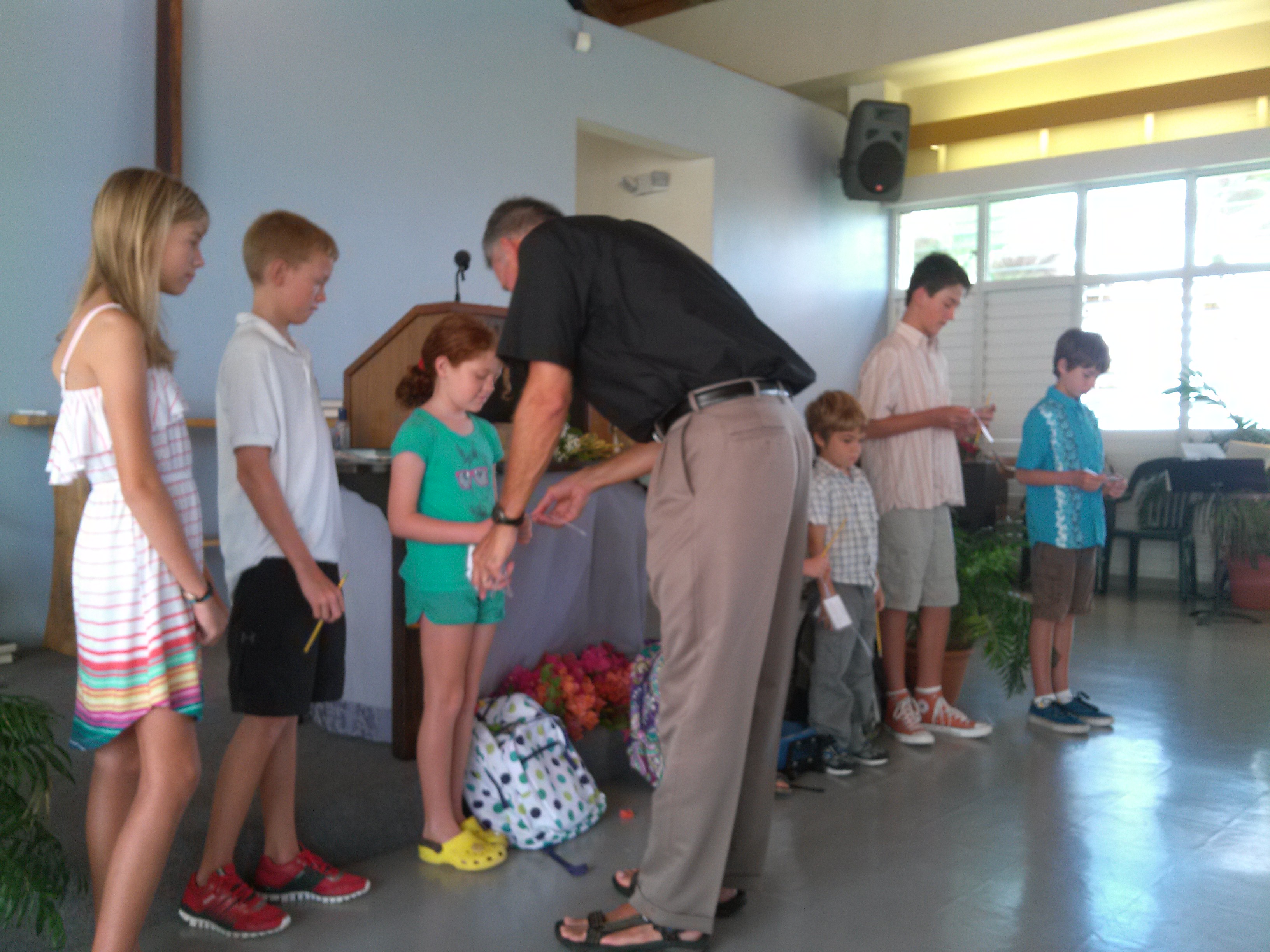
The school year is off to a great start thanks to the Blessing of the Backpacks!
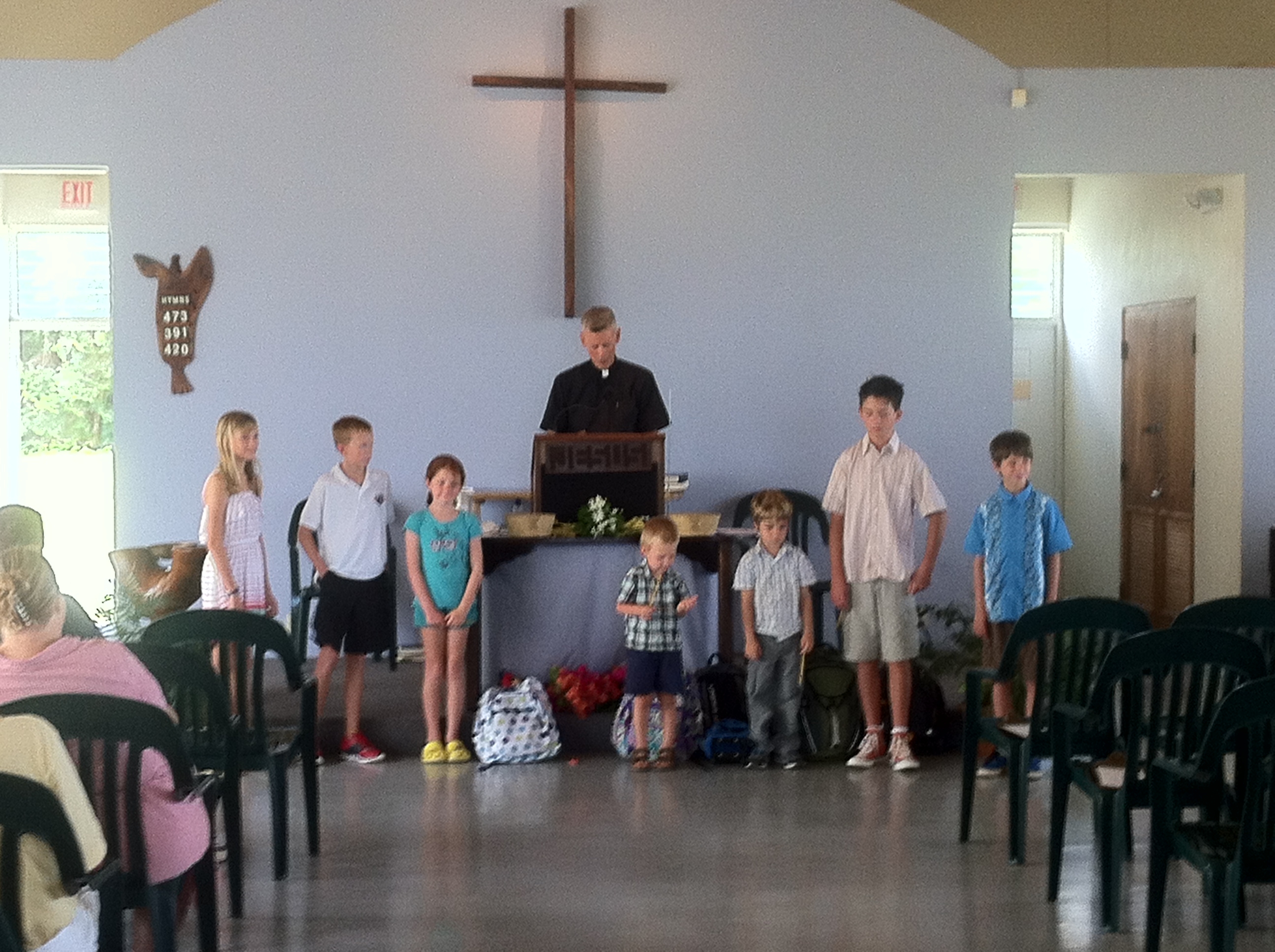
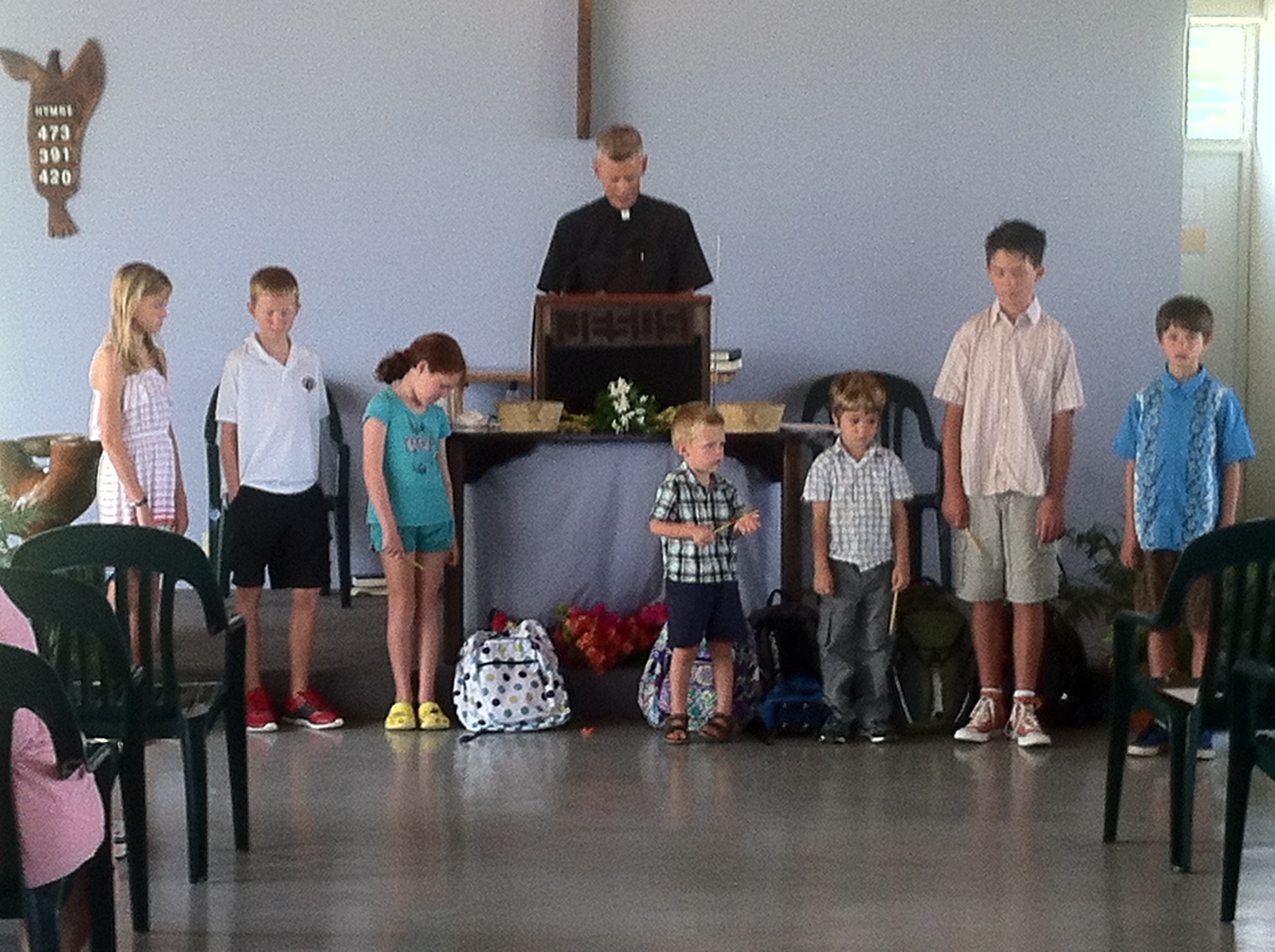
Blessing of the Backpacks
Remember the anticipation of the first day of school? I know that I do. I loved the smell of those new crayons; the beauty of a brand new PINK eraser; and the way my notebooks just screamed out with organization. But I also remember being scared. Who would my friends be? Will they like me? What about my teachers? What will they be like? Will I get lost wandering the halls? In our Old Testament reading this Sunday, Jeremiah is scared too (Jeremiah 1:4-10). But God has a message for him AND for us . . . “don’t be afraid, I am with you”! Come join us Sunday for worship and to share in the “Blessing of the Backpacks” as the new school year is upon us. See you Sunday!


 St Croix Reformed Church
You must be logged in to post a comment.